
External agitation points and slurry gas ventilation
DAFM Specification S.123 prohibits new internal agitation points inside cattle sheds. Every agitation bay must sit outside roof overhangs with at least 6 m clear air space between adjacent buildings, and slurry tankers must never drive onto slats.
Designing slatted tanks and shed roofs so lethal hydrogen sulphide gas escapes outdoors and agitation stays compliant with DAFM S.123 and HSA guidance.
Free, no obligation. One local builder prices it, not five.
- 6 mmin clear gap between sheds
- €6,403DAFM external agitation point ref
- 0 internalindoor agitation points allowed
- 100% emptyshed during every agitation
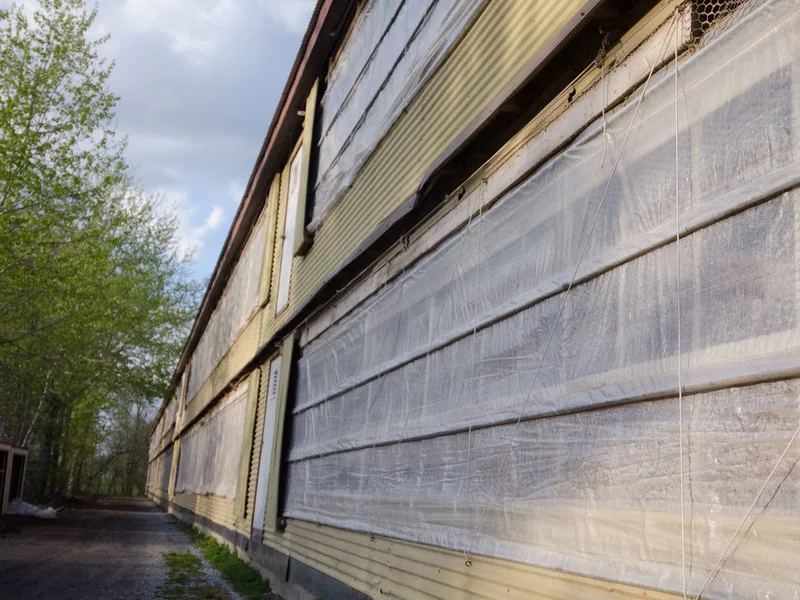
DAFM S.123 layout rules for safe slurry agitation
Hydrogen sulphide (H₂S) released in the first 30 minutes of agitating stored cattle slurry is heavier than air, smells briefly of rotten eggs at low levels, and deadens the sense of smell completely at fatal concentrations. Good shed design eliminates trapped gas pockets before the agitator PTO ever turns.
- External agitation bays only. Extend the slurry tank 1.2 m to 1.5 m past the gable or side wall with a dedicated concrete apron so the tractor and pump stay outdoors in moving air.
- Never place an agitation point under a roof overhang. Eave projections trap rising gas directly around the tractor operator and push fumes back under the shed roof.
- Keep 6 m clear between adjacent buildings. Where an agitation point sits between two farm sheds, S.123 requires at least 6 m unobstructed distance (measured between roof overhangs) for cross-wind dispersal.
- Heavy safety grids and lockable manhole covers. Fit recessed galvanised safety grids underneath solid concrete or steel lids so nobody can fall into an open tank while connecting suction hoses.
- Position agitation points at both ends on long tanks. Tanks over 4 bays (19.2 m+) need agitation access at opposite ends or mid-length extensions so crust breaks cleanly without over-running pumps.
Work out your slatted shed cost
Four quick taps and our bay-by-bay price shows before we ask for a phone number. One local farm shed builder rings you, not five.
4 bays slatted tank and slats, TAMS 3 still to decide: €44,000 to €72,000 ex VAT.
How the bay-by-bay figure is worked out
The guide multiplies going Irish per-bay slatted build ranges (excavation, shuttered reinforced tank, gang slats, external agitation point, steel frame, cladding and penning) by bay count, ex VAT. When you select 40% or 60% TAMS 3, the indicative net figure deducts grant aid up to a single €90,000 investment ceiling; splitting slurry storage under the separate 60% Nutrient Storage ceiling or building as a registered farm partnership (€160,000 ceiling) increases grant support further. Rock breaking, high water tables, rubber slat mats and extra feed passage widths are priced when the builder walks the yard.
Natural stack-effect ventilation in slatted sheds
Warm air rising off cattle carries moisture, ammonia and background tank gases upward. If the shed lacks matching inlet and ridge outlet area, condensation drips off steel purlins and respiratory disease spreads quickly.
- Protected open ridge outlet. Allow roughly 50 mm of continuous ridge opening for every 3 m of shed width (around 250 mm to 300 mm on a 15 m wide shed), protected by an upstand cap.
- Vented side cladding or space boarding above 2.0 m. Vented steel sheeting or 20 mm to 25 mm spaced Yorkshire timber boards let fresh air flow in evenly without hitting lying cattle with cold draughts.
- Solid perimeter wall up to animal shoulder height. A 1.8 m to 2.1 m mass concrete perimeter wall shields cattle from freezing cross-winds while upper inlets feed the roof stack.
- Evacuate all stock and open every door before agitating. Follow Health and Safety Authority rules: agitate on a breezy day, keep all people and animals out of the building, and stay upwind for 30 minutes.
More slatted shed guides
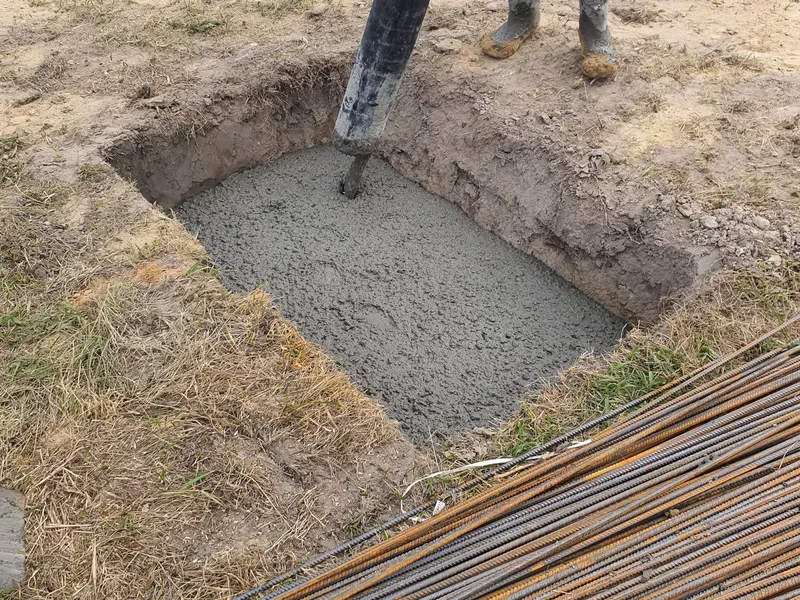 Tank depth & storage weeksS.I. 113 county weeks (16 to 22), animal output and 200 mm freeboard.Slatted tanks and extensionsPer-m³ tank rates, agitation bays and tying into existing yards.
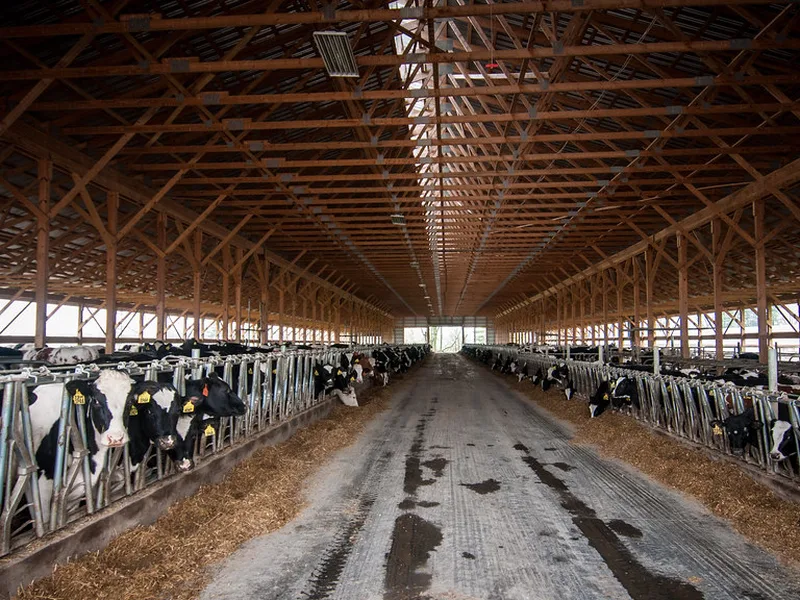 Double-sided vs single-sidedComparing single-tank layouts against central-passage double units.
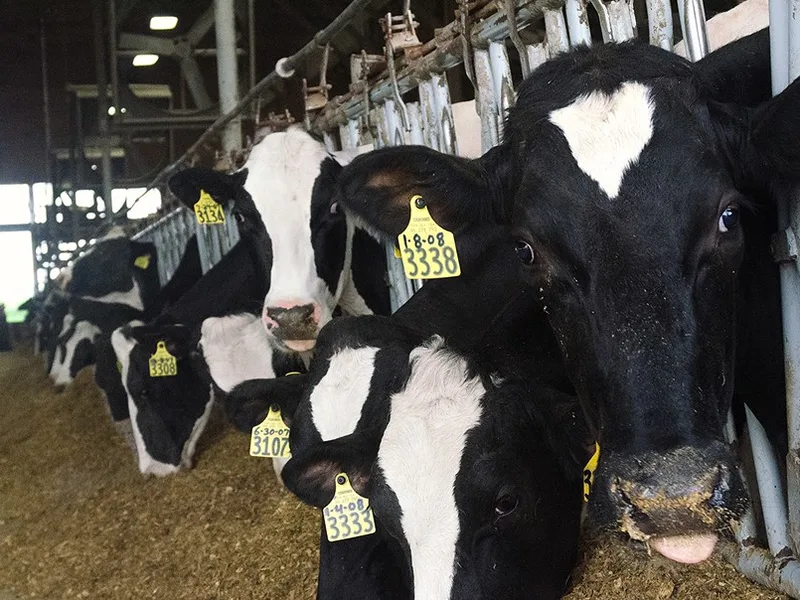 TAMS 3 40% and 60% grantsSeparate €90,000 Nutrient Storage ceiling, 70% importation and approval rules.
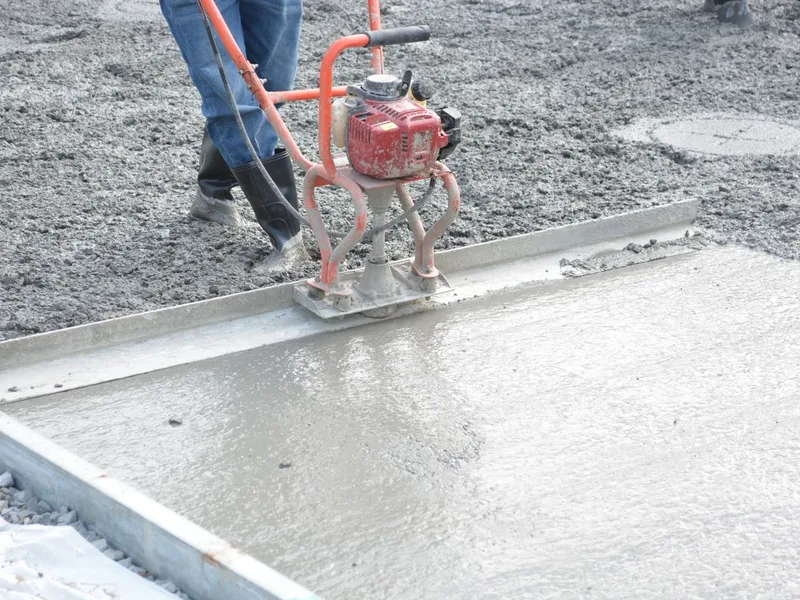 Build timeline & concrete curingRock digging, C30/37–C35/45 pours and the 28-day curing wait.
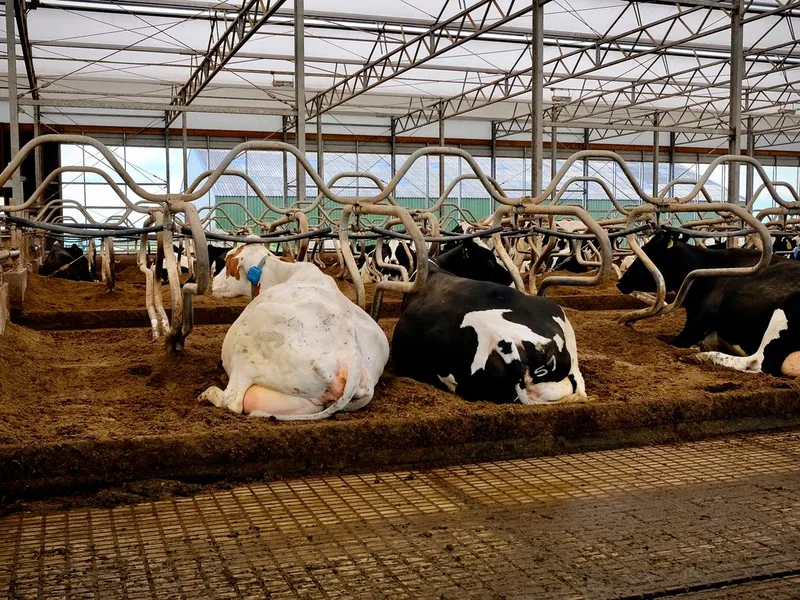 Cubicle and slat shedsCow place costs, slurry channels and dairy herd expansion specs.
Common slatted shed questions
How much does adding an external agitation point cost?
DAFM's TAMS 3 reference cost for an external agitation point is €6,403, covering tank extension concrete, safety manhole cover, solid lid and compliant surrounds.
Can I convert an old internal agitation point under TAMS 3?
Yes. Closing off legacy indoor agitation ports and extending an external agitation bay is prioritised under farm safety and nutrient storage upgrades.
Why must roof sheeting have non-drip fleece in a slatted shed?
Warm moist air hitting cold single-skin steel sheets condenses and rains down onto cattle backs and straw creep areas. Anti-condensation fleece holds moisture until airflow evaporates it.
How many metres of clear space do I need to park a slurry tanker at the agitation point?
Allow at least 12 m to 15 m of straight hardstanding apron in front of the external point so a tractor and 2,500 to 3,000 gallon tanker can align cleanly without reversing onto slats.
All slatted shed pages and technical guides
Slatted shed types
Specs, tanks & grants
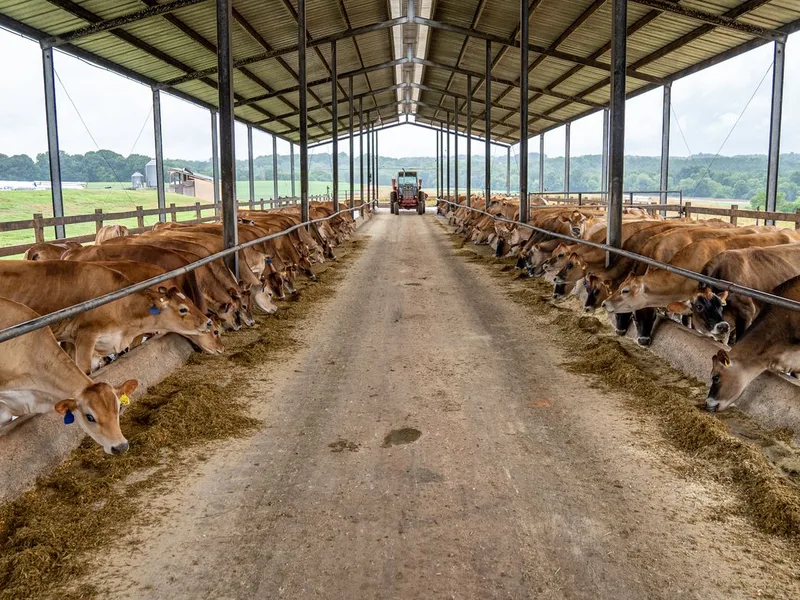
See your bay-by-bay cost before a builder rings
Pick the slatted shed layout, bay count, TAMS 3 rate and county. When you want a site quote, your outline goes to a single farm shed builder in your county.