
Feed barriers, head spacing and straw lie-back ratios
Straight horizontal feed rails cost around €143 per 4.8 m bay while diagonal barriers run about €300 per bay. Pair a 4.42 m slatted pen with a 4.5 m to 5.0 m sloped straw lie-back for suckler cows and calves.
Choosing between straight feed rails, diagonal barriers and self-locking head gates, plus matching concrete lie-back depth to your slatted pen.
Free, no obligation. One local builder prices it, not five.
- €143straight rail per 4.8 m bay
- €300diagonal barrier per 4.8 m bay
- 600–650 mmfeed face per mature cow
- 1:20 falllie-back slope toward slats
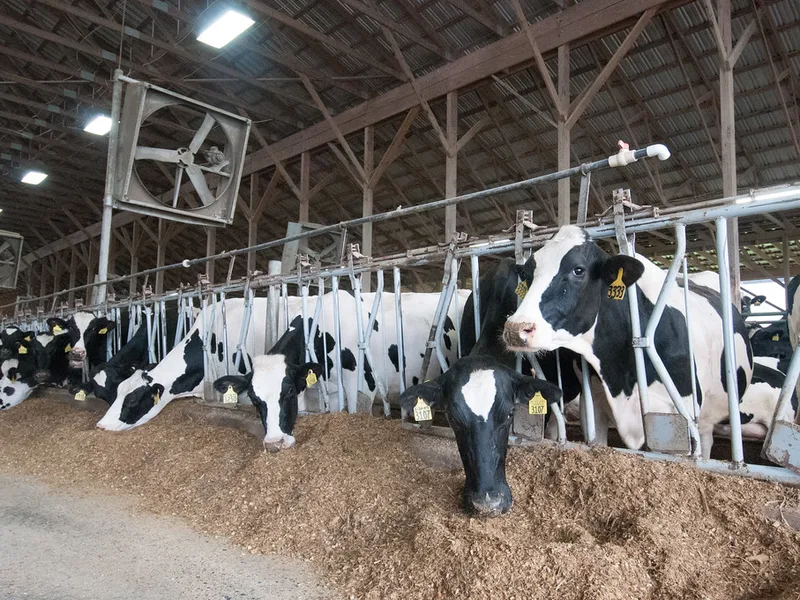
Comparing three cattle feed barriers along a 4.8 m bay
Feed barrier geometry decides how cleanly cattle eat, how much silage gets dragged back onto the slats, and how safely one person can handle cows for scanning, dosing or calving assistance.
Straight horizontal neck rail
- Typical bay cost
- Around €143 / bay
- Strengths on an Irish slatted shed
- Lowest cost; suits ad-lib silage where horned cattle or mixed sizes feed freely.
Diagonal feed barrier (7 to 8 spaces)
- Typical bay cost
- Around €300 / bay
- Strengths on an Irish slatted shed
- Stops bullying at meal time and reduces silage pull-back into the tank by over half.
Self-locking head barrier
- Typical bay cost
- Higher bespoke cost
- Strengths on an Irish slatted shed
- Locks 7 to 8 cows simultaneously for AI, scanning, blood testing or calf fostering without moving pens.
Work out your slatted shed cost
Four quick taps and our bay-by-bay price shows before we ask for a phone number. One local farm shed builder rings you, not five.
4 bays suckler slatted shed, TAMS 3 still to decide: €96,000 to €130,800 ex VAT.
How the bay-by-bay figure is worked out
The guide multiplies going Irish per-bay slatted build ranges (excavation, shuttered reinforced tank, gang slats, external agitation point, steel frame, cladding and penning) by bay count, ex VAT. When you select 40% or 60% TAMS 3, the indicative net figure deducts grant aid up to a single €90,000 investment ceiling; splitting slurry storage under the separate 60% Nutrient Storage ceiling or building as a registered farm partnership (€160,000 ceiling) increases grant support further. Rock breaking, high water tables, rubber slat mats and extra feed passage widths are priced when the builder walks the yard.
Getting the lie-back step, fall and creep gate right
- Raise the lie-back 100 mm to 150 mm above the slats. A clean concrete step stops cows dragging wet slurry back onto clean straw while letting urine drain away.
- Pour a 1:20 fall on the solid lie-back slab. Sloping the concrete floor gently toward the slatted pen keeps bedding dry and makes end-of-winter washing simple.
- Raise the feed passage 150 mm above the slat level. Cattle eat more comfortably and exert less shoulder pressure on the neck rail when the feed table sits slightly higher than their front hooves.
- Fit a 300 mm concrete feed kerb with smooth rounded edge. Stops meal scattering back under hooves and takes scraper blade impacts cleanly.
More slatted shed guides
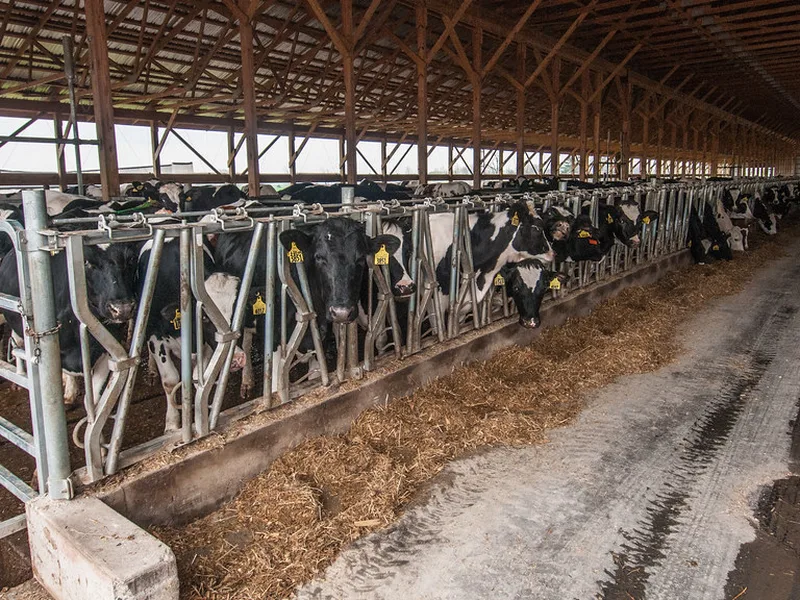 Suckler slatted shedsStraw lie-back depth, calf creep gates and calving pen integration.
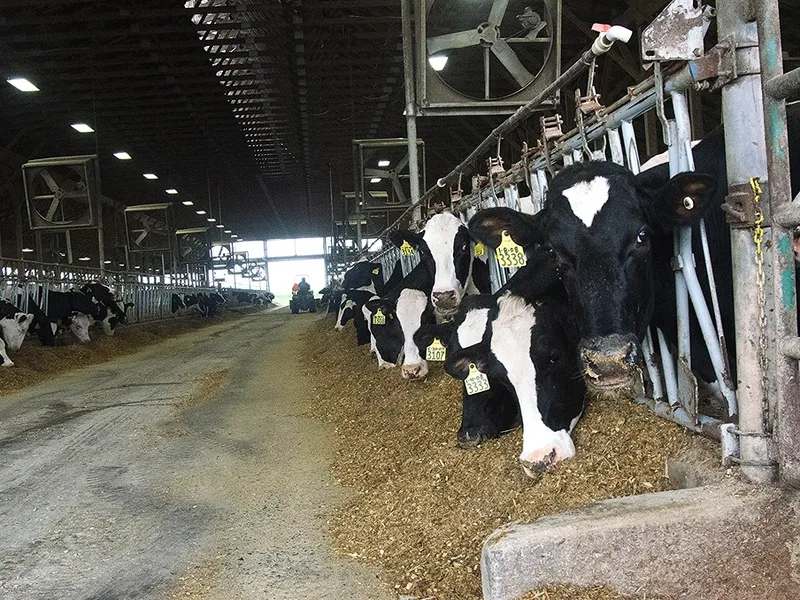 Beef finishing shedsStocking density on slats, feed face width and rubber slat mats.
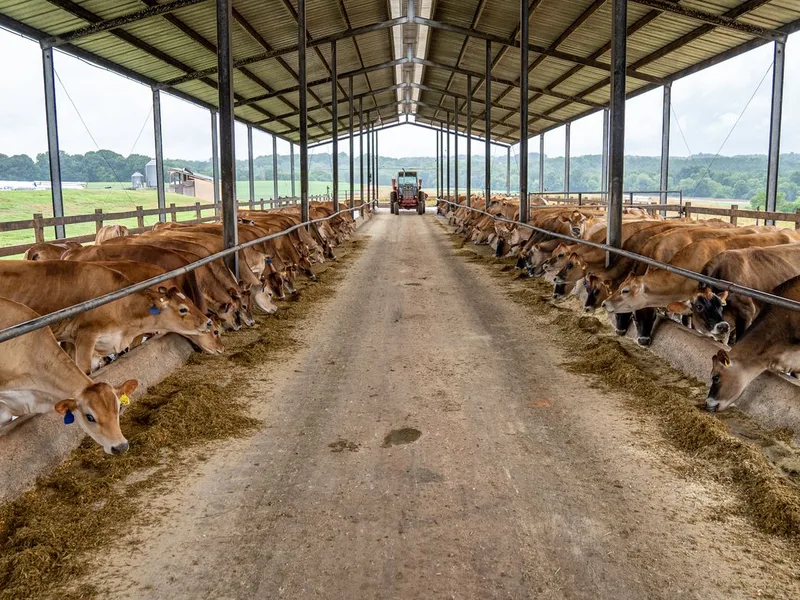 3-bay and 4-bay slatted unitsStandard 4.8 m bay layouts, footprints and per-bay build figures.
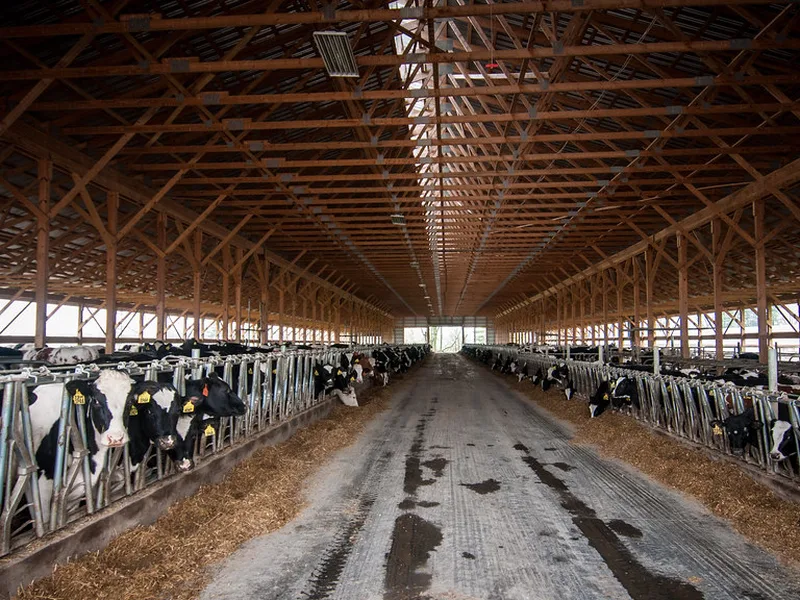 Double-sided vs single-sidedComparing single-tank layouts against central-passage double units.
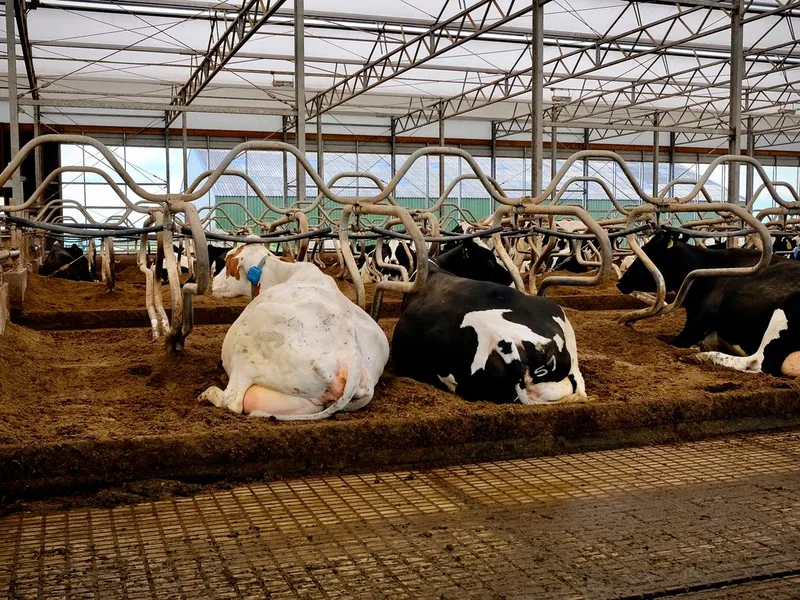 Cattle slats and rubber mats12 ft 6 in, 14 ft 6 in and 16 ft 6 in gang slats, axle loads and mat costs.Slatted shed prices by bayEvery bay rate, tank m³ rate, rubber mat and DAFM reference cost.
Common slatted shed questions
How many feeding spaces fit in one 4.8 m bay?
A standard 4.8 m diagonal or locking barrier provides 7 to 8 mature cow spaces (600 mm to 685 mm each) or 9 to 10 weanling spaces (480 mm to 530 mm each).
How wide should the covered feed passage be?
Build at least 4.5 m clear width for a single-sided drive-through passage and 5.0 m to 5.5 m for a double-sided central passage so a diet feeder or tractor with shear grab feeds both sides without catching barriers.
What angle works cleanly on a diagonal feed barrier?
Galvanised bars welded at roughly 60 degrees with 320 mm to 350 mm clear throat gaps stop stock backing out suddenly while preventing calves getting trapped.
Should dividing gates between slatted bays be solid or open bar?
Heavy tubular 5-bar or 6-bar galvanised dividing gates let air circulate freely along the length of the shed while keeping groups separated safely.
All slatted shed pages and technical guides
Slatted shed types
Specs, tanks & grants
See your bay-by-bay cost before a builder rings
Pick the slatted shed layout, bay count, TAMS 3 rate and county. When you want a site quote, your outline goes to a single farm shed builder in your county.